Cloud ERP is Software as a Service that allows users to access Enterprise Resource Planning (ERP) software over the Internet. Cloud ERP generally has much lower upfront costs, because computing resources are leased by the month rather than purchased outright and maintained on premises. Cloud ERP also gives companies access to their business-critical applications at any time from any location.
While technically the only difference between Cloud ERP and on-premises ERP is where the software is physically located, there are other significant differences. Here we explain some of the key characteristics and advantages of Cloud ERP software.
The Cloud is particularly valuable to small and medium-size businesses (SMB’s) because it provides access to full-function applications at a reasonable price without a substantial upfront expenditure for hardware and software. Using the right cloud provider, a company can rapidly scale their business productivity software as their business grows or a new company is added.
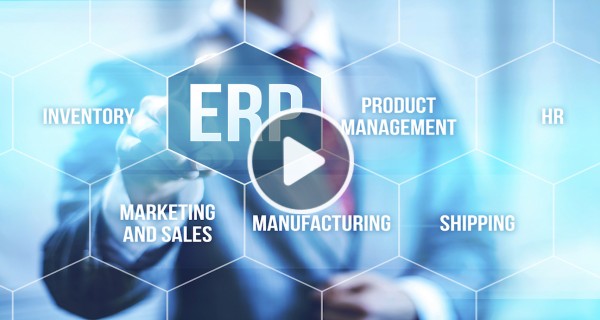
Benifits of Cloud ERP in PowerBooks
ERP (Enterprise Resource Planning) software that connects your finance, accounting and operations data is a must have in this day and age, particularly for dynamic and fast-growing companies. Yet, ERP software can be too expensive and too hard to manage for some growing companies… or so they think. Learn more about benefits of Cloud ERP. Cloud ERP can be a great choice for growing organizations. Your other choice is On-premises ERP, which means the servers are at the company location and maintained by your company. While both Cloud ERP and On-premises ERP offer similar functionality in terms of tools and usage, Cloud ERP offers cost savings, flexibility, scalability, security and speed that growing companies will find very appealing.
* Cloud ERP can save you money
Take a deep breath and stretch….ahhhhh…that’s better. Cloud ERP is flexible because it can be accessed from anywhere with any Internet-enabled device. That means you have the ability to make good business decisions no matter where you are from a laptop, tablet or mobile phone. You can also share data more easily across locations and departments, and because everyone in the company is interacting with centralized data through a common interface, the likelihood of interpreting the data differently between functions is lessened and opportunity for collaboration is increased. Finally, data that is in a Cloud ERP is easier to use with BI tools designed to work with data in the Cloud, providing you the flexibility to choose which reports and dashboards will work best for your company.
* Cloud ERP makes you more flexible
Companies that moved from on-premises ERP to Cloud ERP saved immediately because they no longer had to fund or manage their own data centers. Instead, they pay a Cloud ERP provider a monthly or yearly payment to manage it for them. The goodness of this setup is further realized when the company spreads the monthly or yearly payments out and treats it as a recurring, fully tax-deductible expense
* It’s easier to scale your growth with Cloud ERP
Scaling is a complicated science. If you grow and scale your business too slowly, you’ll fail to keep up with your customers and competition. But if you scale too quickly, you might over-spend and waste resources. A Cloud ERP system solves this dilemma because it offers a scalable platform, ideal for startups and fast-growing businesses alike. As new employees enter the company, you don’t have to purchase and install new hardware or additional software seats. Rather, you can scale your Cloud ERP package to accommodate an unlimited number of users, without the hassle of maintaining or replacing on-premises hardware and software.
* Cloud ERP is fast and secure
Cloud ERP is fast because data centers are hosted and maintained by the best of the best in world-class hosting environments like Amazon Web Services (AWS) and Microsoft Azure. Their sole purpose is to make your data accessible as easily, as fast, and as secure as they can possibly make it. These data centers ensure geographic diversity and back-up and store your data in multiple places to make sure nothing gets lost.
* Everything in One Place
One of the biggest benefits of cloud ERP is that it offers superior platform integration, which enables organizations to derive more business value out of other cloud technologies. With on-premises systems, organizations must buy and use different products separately, which contributes to a highly siloed architecture.Cloud technology — including customer relationship management and business analytics — is typically sold as a package, which allows for better system integration and more advanced analytics and reporting. This gives businesses a better handle on their data because all of the tools used to look at and analyze data are stored in one place — the cloud.
* Ready for the Next Generation
Cloud ERP is ideal for change management because the next generation of the workforce — millennials — is accustomed to using apps and mobile devices. “From a change management perspective, it’s about giving your workforce the tools they demand,” says Alagna. “It’s about appealing to a millennial culture by providing the tools and capabilities they’re used to using.” Compared to cloud ERP, on-prem ERP systems lack app capability. In order to attract the talent that they need to continue to thrive and evolve in the digital age, businesses need to adopt systems and solutions that are intuitive for younger talent to use, including cloud ERP software.
* Discover the Power of the Microsoft Cloud With PowerBooks
An ERP system is one of the most crucial tools a business can use to maintain a competitive edge. Cloud ERP marks an exciting shift in how organizations use ERP to improve business processes, moving to more forward-thinking systems that adapt to business needs rather than the other way around. Hitachi Solutions has partnered with Microsoft to deliver a powerful cloud ERP system built for, and on, Azure. Hitachi Solutions’ Cloud ERP is designed to help businesses reduce IT costs, enhance security, improve performance, and grow at their own pace through the use of advanced analytics and innovative technology. To learn more about cloud ERP or Hitachi Solutions’ work with Microsoft, reach out today to start a conversation.
Benefits Of Cloud ERP Software
A Complete Yet Affordable ERP
A complete ERP to automate all your business operations end-to-end without heavy investment.

Cost Savings
Requires no particular hardware/software configuration, additional maintenance and support cost, and highly paid IT staff. Moreover, works on ‘pay-as-you-go’ subscription model.

Complete Security
Assures extremely secured environment with disaster recovery facility running 24x7.

Flexibility & Ease of Access to Service
Needs only web browser and network connection that can be accessed from desktop, laptop or mobile devices; anytime, anywhere

Scalability
Easy start-up with a minimum number of users. Moreover, flexible enough to increase number of licenses whenever required.

Peace of Mind Ensured
Automatic software upgrades, regular data backup and 99.9% uptime with a supreme Disaster Recovery plan assures that system is always current, up-to-date up, running and always available.

Experience & Expertise to Stand Apart
ERP sans all those hitches of implementation and workarounds. Thanks to 30 years of experience in process manufacturing arena and a highly qualified plus expert task force.
Faster Time to Value
Makes your staff more productive, improves operational efficiency, and thus helps you realize ROI faster.